
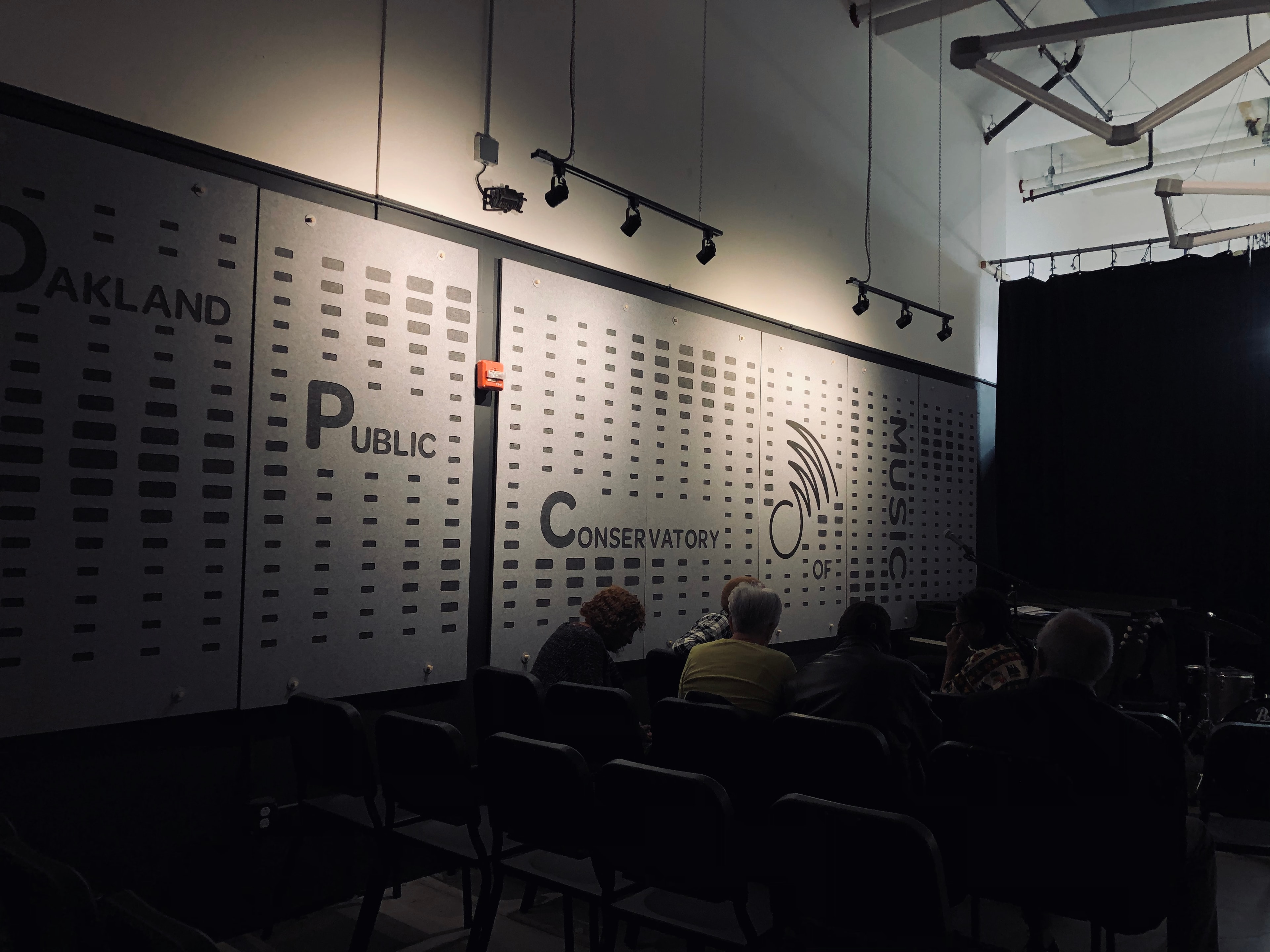
Oakland Public Conservatory of Music
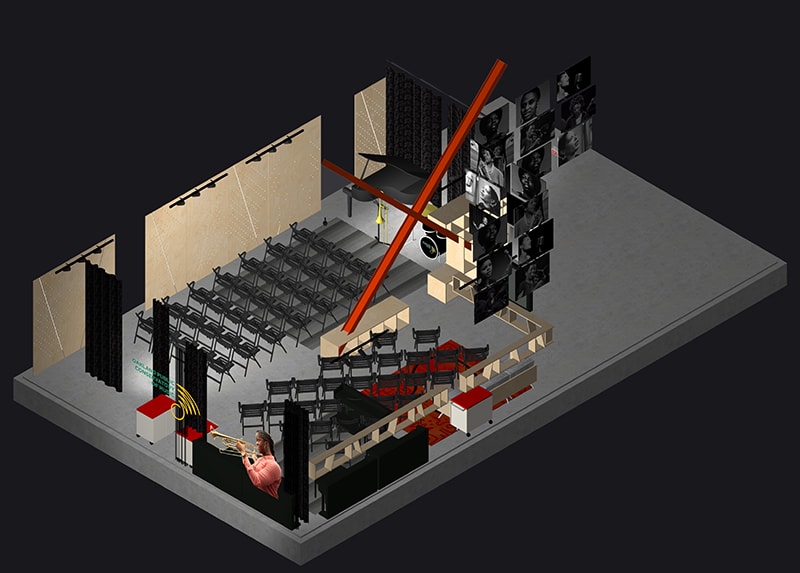
Design is not dependent on available funds, only. Design is the resultant of the consideration of multiple factors, the investigation of several directions and the development of the preferred solution. Cost and long-term performance are integral. But the outcome, the answer , must be more than all the factors combined. The final result is the joy of seeing ones' self reflected through form. Laser-cut & 3d printing techniques were used to produce customized acoustic and lighting solutions at accessible costs to the community music conservatory— creating a civic home for Oakland's rich musical traditions and the next generation of musician artists.
LOCATION
Oakland, CA
YEAR
2020
SIZE
—
STATUS
Completed

Context
The OPCMusic Acoustical Wall, a composition of ten panels, is the second phase of an overall design strategy to insert a small performance space at the base of the historic California Hotel along San Pablo Boulevard, Oakland, California. The wall panels declare music is back in the San Pablo district which was once home to celebrated and up-and-coming black jazz artists, and still home to a predominantly African-American population.
Challenge
Designing a music facility for a broad public — from young students to professional performers — required balancing acoustic precision with spatial openness. The building needed to project civic presence on its Oakland street while remaining welcoming and accessible to residents who may never have set foot in a traditional concert hall.
Acoustical panels are the first of two stages required to address the reverberations in the space and dampen sound transfer to adjacent tenant occupants. Transformation of the hard retail storefront into an instrument for music involved a steady search for high performance from a soft material, at a low price-point. Felt met the project's considerations - inexpensive, versatile, and exceptionally durable.


Design
The panels were designed to be used for a variety of applications, from space partitioning, to acoustical dampening, and added texture to a space characterized by flat white walls.
The design solution is the result of several factors including cost, but also long-term performance. Synthetic felt was selected instead of wool as it had a lower price point and larger number of color options. It has other advantages - resistant to mildew and fungal growth, does not absorb moisture, and resists wrinkling and buckling.
Digital Fabricaton
Typically, precise cutting is done by means of an industrial die cutter, which is costly when producing small quantities, proto-typing new ideas, and/or experimentation. Felt is not woven, which means it has no warp, no weft, and no bias; it doesn't unravel, which makes it an ideal material for intricate processes. However, because it is thick and relatively unforgiving, cutting intricate patterns and structures into felt is difficult to do by hand. For OPCMusic's panels we relied on digital fabrication techniques; where laser or CNC-knife cuts produce wonderfully precise results.


Credits
Recognition
—
Funding
—